


Gas remains key even as renewable generation reaches record high
Published: 16 September, 2026
Gas remained the UK’s largest individual source of electricity generation in 2025, even as renewables reached a record share, showing why dependable and flexible generation is still needed in the UK’s changing power system, according to energy specialist Finning UK & Ireland.
The Government’s latest Digest of UK Energy Statistics (DUKES) report shows renewable generation increased by 5.9% to a record 153 TWh and accounted for 52.1% of electricity generated. Gas generation also rose by 6.6% to 93.2 TWh, providing 31.8% and slightly outpacing wind’s 29.5% share.
Overall electricity demand increased by 1.2%, while nuclear generation fell by 12% and net electricity imports dropped by 11%.
Mark Albiston, Director of Electric Power and Engineering at Finning UK & Ireland, said: “The record contribution from renewables is a significant achievement, but the increase in gas generation shows that the system still has to meet demand when wind and solar output falls, when other generating capacity is unavailable or when more power is needed at short notice.
“The annual totals don’t show the hour-by-hour challenge of keeping supply and demand in balance across the grid. When renewable output is lower, conventional generation must be available. The DUKES figures show that the need for gas has not disappeared even as renewable capacity has grown.”
Finning says that gas generators provide a power solution that can supplement grid supply while also providing the benefit of combined heat and power (CHP) systems, which recover the heat produced during electricity generation for use on site. The company has installed more than 600 MW of gas generation equipment in the UK.
Albiston continued: “For a hospital or another facility with consistent demand for both power and heat, CHP can be a useful asset. It generates electricity on site and captures heat that can be used for heating, hot water or other processes.
“That is different from standby generation, which protects the site in an emergency if its grid supply fails. However, a CHP assessment needs to consider the electrical and thermal needs of the site, the expected operating hours and whether there is a consistent use for the recovered heat.”
Finning also supplies battery storage and controls that can be integrated with gas generation.
Albiston added: “If a site also needs to operate during an outage, that requirement must be designed into the system. The resulting solution may combine gas generation with renewables or battery storage, but every element must be matched to the job the site needs it to do.”
To find out more, visit www.finning.com/en_GB/industries/electric-power-generation.html
https://www.linkedin.com/company/finning-uk-/home/
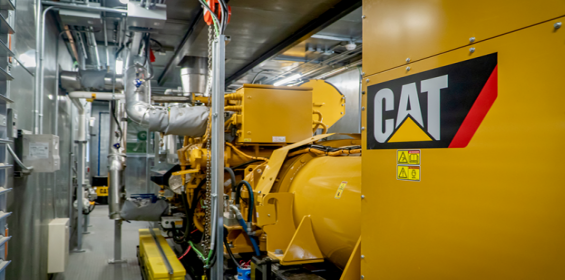
Cat combined heat and power system


